

Journaling Does, In Fact, Work
discussing creativity, well-being, and the life-changing effects of putting pen to paper with my friend, journaling expert Laura Rubin

I don’t have to tell you that journaling is one of the cringier modalities under the broader wellness category. Like many of its feminine-presenting contemporaries, its connotations are cliché, basic,—and apologies because this is one of my least favorite adjectives in the English language—more or less woo-woo.
A pastel-colored notebook pairs well with nail polish and sheet masks, making for a delightful yet sexless gift that symbolizes superficial self-care. All in all, stereotypically uncool. And yet, deeply effective.
I keep bumping up against these damn clichés and their origins in factuality. Journaling, otherwise known as confronting your feelings in a physical and mental release, is a proven tool for emotional regulation and holistic well-being. I engage with the practice somewhat regularly, although I’ll admit it’s less preventative and more interventional these days. It’s not a replacement for therapy by any means, but it’s a hell of a lot more accessible, and there are plenty of similarities in their approaches. After you push through the topical matters of the moment, you’ll reach the next layer of interior depth. If you keep going, you can even hit the core—the inner wound, as I believe they call it in the biz.
Take this with a grain of salt, as this is coming from a semi-professional writer, but journaling is the easiest way I know how to clear the confusing thoughts, the creative cobwebs, and—frankly—scary inner judgments out of my brain.

So if I love journaling so much, why has it taken me two years to cover its merits on this digital publication that supposedly covers the vast and indefinable wellness industry? Well, like I said, it’s aesthetically ugly, which has way too strong of a bearing on my personal interest. This is the same reason why I have so much appreciation for the work that my friend, journaling expert, Laura Rubin does on a daily basis.
Laura and I used to work together, and our client-turned-mentor-turned-big sister relationship arc is one I could only hope for every woman out there. She is one of my favorite people to talk to, so lucky for me, I had the chance to do so, and publish it on the internet for you all, where it will live in perpetuity.
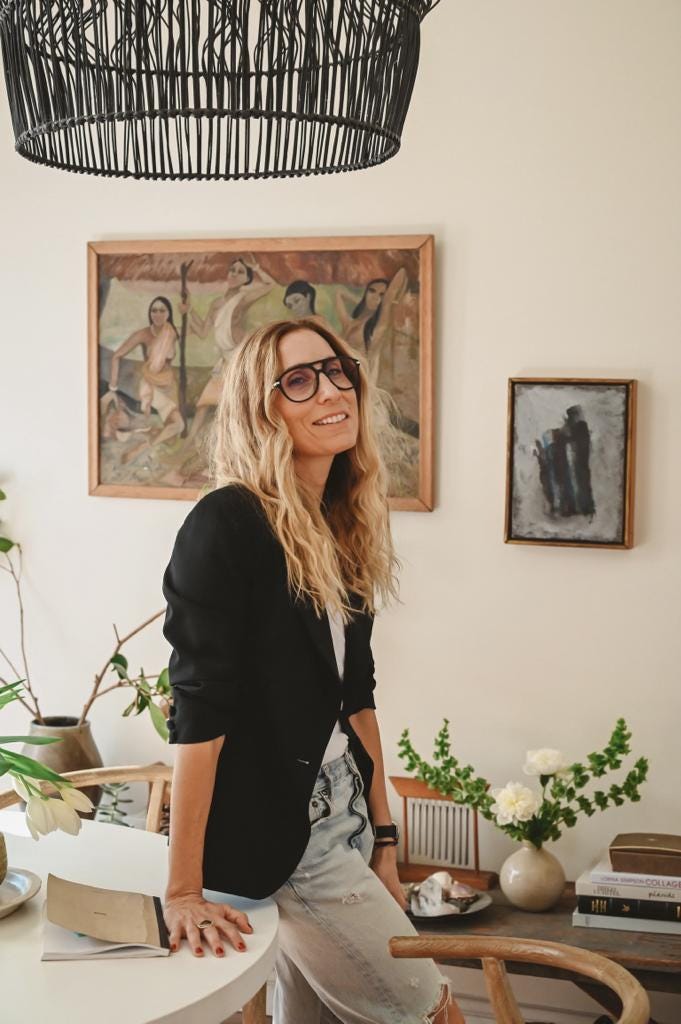
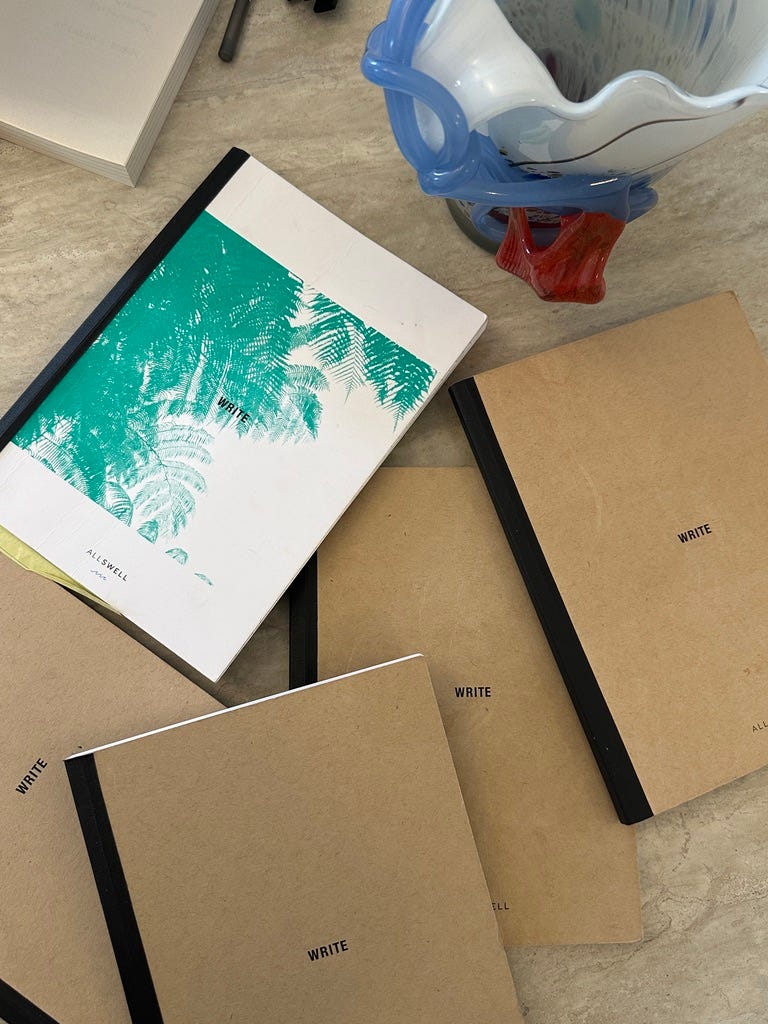
Laura L. Rubin is the founder of AllSwell Creative, a mindful writing company devoted to cultivating self-awareness and creativity through journaling. She’s also the author of her Substack, “Since You Asked”, and as of this week, her new book, The Big Unlock. In it, she combines years of journaling expertise with science-backed research and original prompts to bring her teachings to a wider audience. I hope you enjoy this conversation between two skeptical New Yorkers from different generations who double as wellness devotees, but if you’re just here for the journal prompts, you have my permission to skip to the end.
KS: Okay, well obviously I know your backstory, but do you want to give us a little bit of context about how you got to where you are now and what your past life looked like?
LR: Yes. I was running a marketing and communications consultancy that I’d founded, and I wanted something that was just for me—a passion project that didn’t require client sign-off on my own creativity. So I was looking around for things that felt really intrinsic to who I was, that I would enjoy. And I felt that journaling at the time had a really bad PR problem—that it was more associated with teen ink scribbling and overly scented bath products than being the legitimate modality for mental, emotional, physiological well-being.
So I started initially just with physical products that were designed-forward and gender neutral, just as a way of shifting the cultural conversation a little bit. And it was from that experience that I learned that this thing that I’ve been doing since I was 7 years old—this thing that was completely intuitive to me—people have a ton of hangups around. They think they’re bad at it. They think they need to be a great writer. They’re afraid somebody’s going to read it. They’re concerned that their handwriting isn’t good enough. Like, the list of things that I’ve heard at this point is so long.
And that’s where the curriculum came from. I decided, I could use my nerdy English major background and all of my professional background in experiential marketing to put something together that would be enjoyable, grounded in science, but also something that would inspire people to come to the page. So that was the origin story of how and why I went down this unexpected road. Nobody’s more surprised than I am. I’m still not entirely sure what my job title should be—by the way, if anybody has a great idea, I will give them a free copy. But it has been a very organic process, and I absolutely love what I do.
KS: I can try to help you with that title, but I guess I’ll need to know—what does your day-to-day look like? What sorts of things are part of your ‘job’?
LR: So there's the business of running a business, which is very left brain. And then there’s the creative side, and that includes creating workshops, leading workshops, doing my creative coaching, and also writing. Now, that includes other things beyond the book—I have written lots of blog posts, content pieces, captions. I don't farm any of that out to a third party. That's all me.
What I've learned is that I can't tick-tock back and forth between left and right brain. And so I organize my week into certain days for meetings, certain days for left brain, and then I try to set aside one day a week just for creativity.
KS: You write in so many various formats, and I mean, obviously journaling is writing, but it’s also quite different. What’s the difference between all of them to you?
LR: There is no third party reader when I am journaling. Some of my Substack content can feel like it maybe started on the page of a journal. But the intention is always to have it read.
One of the things that I love so much about journaling is that it’s a place for me to recover my own voice for the sake of my voice—not for it to be consumed by anybody else. And I think that’s what a lot of creatives are missing right now. Creativity for the sake of creativity. There’s such a short period between creation and sharing and reaction now. It didn’t used to be that way. And to be able to step away from that never-ending cycle and reclaim the act of creativity just for yourself—it is an antidote to burnout for me.
KS: Mm. Say more on that.
LR: One of the elements of creative burnout is constantly being in an approval loop. Creativity needs time and space to gestate. To be a mistake. To be unfinished. That kind of permissive space, unfortunately, doesn’t exist as frequently now as it used to. We are, as creatives, supposed to be pumping out content constantly, and it is all there for somebody to like, not like, comment on positively or pejoratively, or it’s crickets. And it is... a recipe for burnout.
KS: I love hearing stories about your workshops, where you go to big companies and how you have these people with these hardened, professional exteriors and how they have big breakthroughs. Can you talk a little bit more about what that looks like?
LR: Yes. So I’ve now led hundreds of these workshops and everyone is different and special, of course, but my favorite kind of workshop to lead is when I walk into a room full of people with their arms crossed—who have to be there because their manager is making them be there—and they’re like, “This is a waste of my time. I could be productive. This is bullshit.” And those are my favorite workshops because I’m like, oh yeah, here we go.
*Rubs hands together*
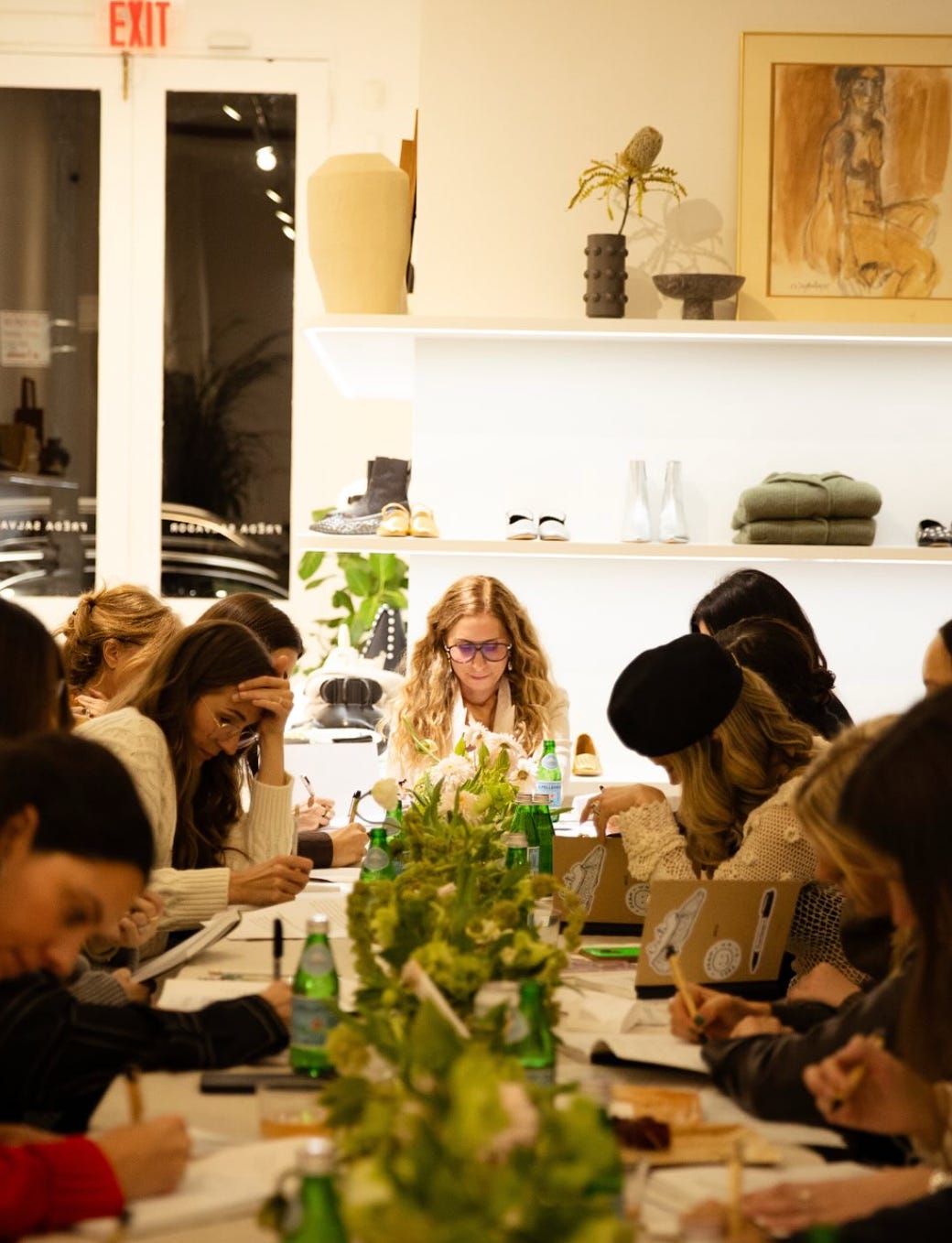
It is so satisfying to witness these individuals—and it’s men and women, but it tends to be more men who have the biggest breakthroughs—whether it’s the Wall Street guy or the data analyst, sitting there just agog at what they witnessed in and of themselves, the breakthrough that occurred in four to six minutes of writing. I love it.
In terms of what a workshop run-of-show looks like at top level: I put together packets of content from writers, lyricists, movie scripts, poems, etc, that fit within the particular theme of that workshop. I use those as devices to get people to read them aloud, get their voices in the room—and it shifts and elevates and inspires.
And then I start with warm-up journaling exercises to bring them into the room, get them comfortable with the act of writing, get them past their cramping hand—which is always inevitable. And I ask them to share not what they wrote, but what the experience was like for them. I ask a bunch of questions to get them to start sharing with me, but also with each other. And what happens over the course of these exercises — punctuated sometimes by those excerpts I’m pulling in from culture — is that collectively, the mind of the room shifts.
KS: What kind of feedback have you gotten afterwards? Like, weeks or months later?
LR Life-changing. Nothing short of that. People went for a promotion they wouldn't have gone for, broke up with a guy, asked out the girl, got the divorce. Like, really life-changing.
Much more personal freedom is the biggest takeaway that people report back. And also a renewed sense of vitality around their creativity. I actually think—mark my words—I think creativity is going to be the next trend in wellness.
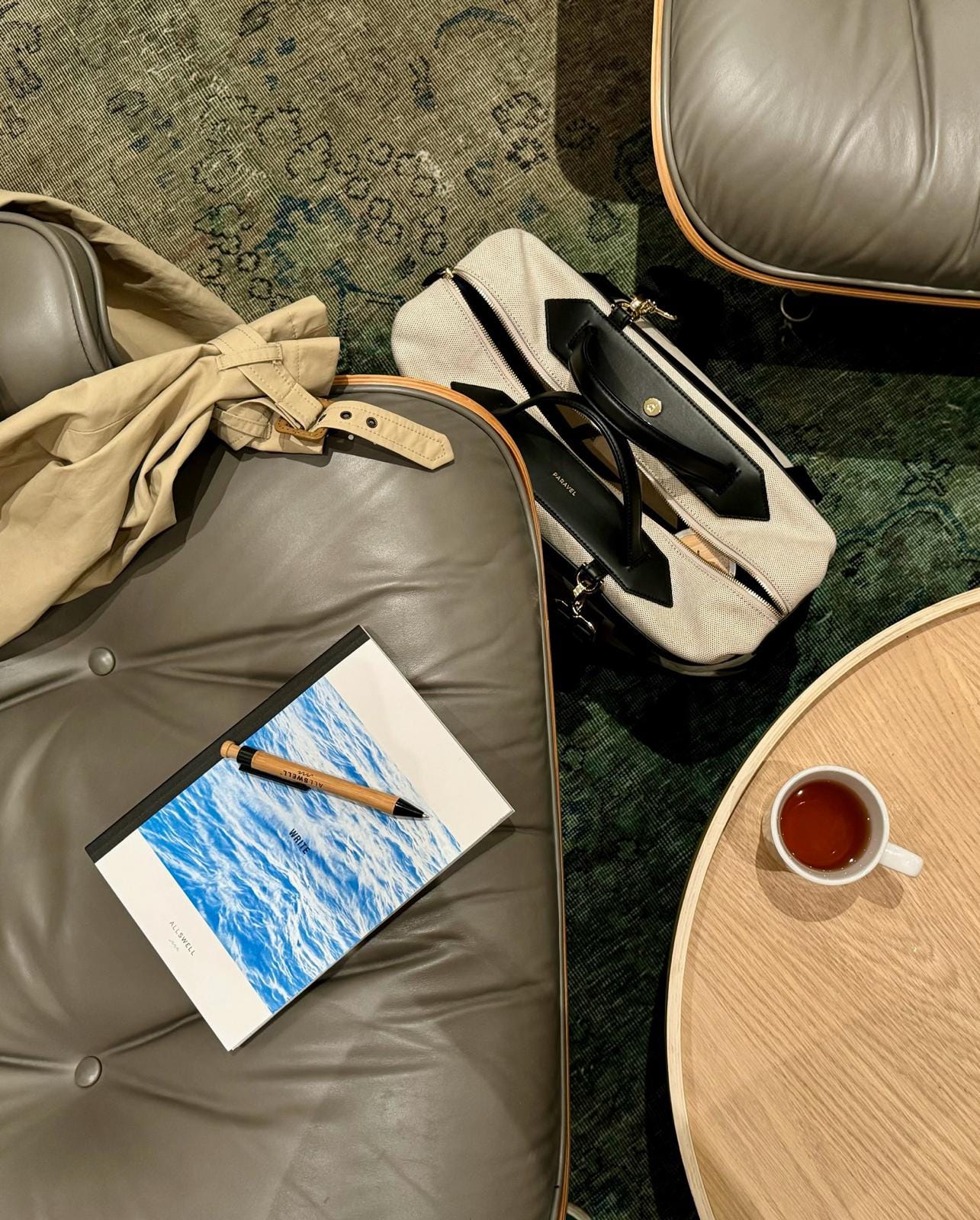
KS: I love that. Yes. Because when I think about wellness, it’s inherently linked to creativity in my brain. Sometimes when I talk about creativity, people say, “Well, that doesn’t apply to me because I’m not a creative.”
LR: Yes.
KS: And I’m like, ‘but that’s not the point. Everyone has creativity. It’s human nature. It’s inherent.’
LR: And that's part of what I talk about. There's a whole chapter early on in the book specifically about that—shifting people's awareness away from thinking that creativity is relegated just to the arts. Every single person on this planet is creative.
We're not all artists—I actually don't believe that. I think artists are a different animal. But we all have creative potential, and being able to nurture that, be engaged with that, give it space to spread out, is massively beneficial. Both for yourself and for your quality of life.
KS: How do you, aside from writing, nurture your creativity?
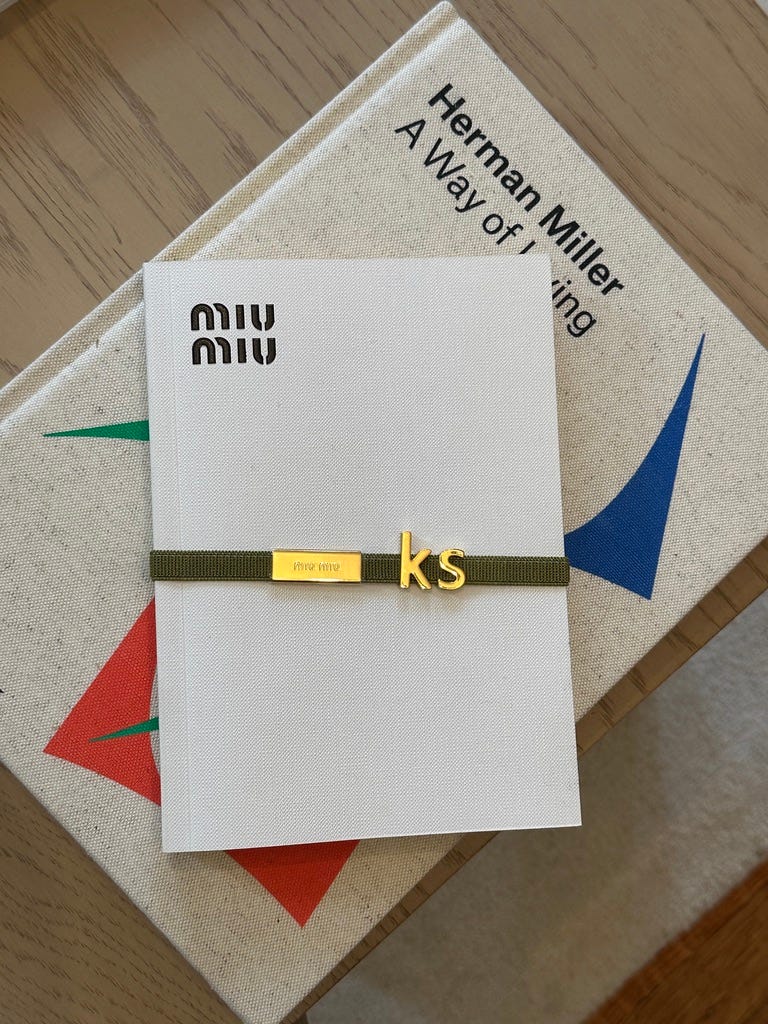
Oh, so many different ways. I make these little—I didn’t even realize what they were until recently—like little altars all over my home. They’re flowers and books and found objects and things. These little groupings are very calming. I really enjoy doing it, I look forward to it. My boyfriend knows I bring home like a bunch of twigs or flowers or whatever and he’s like, ‘Here we go. Let’s see her.’
I also love to read, and I consider reading to be a creative pursuit because I am in dialogue with what I am reading and my imagination is creating movies in my head. That’s one of the reasons to read fiction rather than just nonfiction. I love nonfiction, but reading fiction is so good for you. It’s also incredibly good for your neuroplasticity, which at my age is something I am actively engaged in trying to improve on an ongoing basis.
But also, a beach walk can be a creative act, you know? Like, why is one rock the one that you want to pick up versus the other? You're engaged. That is a creative choice. And anything can be a creative act. The question is whether you allow yourself the permission to play.
KS: It feels like there’s a third piece in the creativity-wellness triangle, which is spirituality. Do you think that intuition is related? Can you have any of them without the other?
LR: I built this entire brand and business and kept any spiritual language out of the mix on purpose. There’s already so much for people who have a spiritual practice in the realm of journaling, and I was trying to invite other people into the tent who would probably be wildly turned off by that. And I feel good about that choice.
However, since you’re asking: I do believe that when we are engaged in a creative act, we are communing with the divine. And it’s one of the reasons why it’s so important that when those glimmers come through and present themselves to you—those creative ideas, an image, a word, you don’t even have to know why, but the idea comes through—it’s really important to honor it by paying attention.
KS: I can tell you've read The Creative Act.
LR: *Nods and chuckles.*
KS: I’m also someone who’s been historically resistant to the spiritual—and I think actually having a writing practice is what opened my mind to even considering spirituality.
LR: That’s beautiful. I didn’t know that.
KS: To your point, I feel like it comes from inside. I feel like I get this intuitive hit of, ‘oh, I have to write about that.’ And I know that feeling, and the feeling is sometimes a little scary because it’s kind of urgent. Like, ‘do this NOW.’ But it’s also like, in my gut, I know this is what I have to do.
LR: Yes, but you're honoring it. The entire process of me doing this is a series of me honoring those... impulses. I have the most unlikely job. And yet, I just kept going. Here I am.
KS: How has your relationship with journaling changed since—you said you were 7 when you started—to now, leading other people in journaling? Like, how has that evolved for you on a personal level?
LR: That’s such an interesting question. I think it’s become a lot richer because I’ve been engaged in this conversation, and so it’s pushed me into new realms with my own creative journaling practice. It’s definitely deepened. And the other thing that’s really interesting is that I’ve now been doing this for 12 years. At no point did I say, “I’m not really sure if this stuff works.” You know, sometimes when your avocation becomes your vocation, you just max out and you’re like, ugh. No. I have never stopped journaling. Because it really genuinely makes me feel so much better. It provides structured thought out of chaos.
KS: We’re talking about feeling these intuitive hits to write, and I can imagine someone who’s not a big journaler being like, ‘What the hell are these women talking about?’
What do you tend to recommend to people who are sort of like, ‘I know I should journal’, or ‘I can’t stay consistent,’ or, ‘do I have to?’ How do you get people to give it a go?
LR: Well, first of all, you don’t have to. Let’s not make this into something where you feel guilt. I want to completely assuage all journaling guilt. But, if you are interested in doing it, I welcome you, and you will gain tremendous benefit from it.
I suggest starting with what I call the microdose method, or the 4 by 4 by 4. Journal for 4 minutes at a time. Even the busiest people I coach have 4 minutes to spare. Don’t aim for every day. Journal for 4 days a week and stick with it for 4 weeks straight. Now, it’s not Whole30—if you fall off the wagon, just bring your attention back to the practice. You don’t start all over; just keep going.
Some people like to mix it up and do 5 by 3 by 5, what have you. But my recommendation is 4 by 4 by 4. You’re building up the muscle memory, of course—but the wonderful thing about that 4-minute mark is that it’s enough that you’re going to get something out of it more often than you won’t. It feels achievable for most people. So you’re giving yourself a nice dopamine hit from the sense of achievement. Neurologically, over time, you’re creating a positive association with the act. This is science, right? We’re using the neural chemistry set as a way of creating a positive bias towards the activity.
If you don’t know what to write… buy my book. Half kidding, but there are 75 prompts in there. You don’t have to start with a blank page all the time. I know a blank page can be really intimidating, and some people feel like all they do is complain on the page. Hey—it’s a classic use of a journal. It’s sort of the little black dress of journaling. But there are so many other ways to use your journal, and an external prompt can really help.
KS: Before we get into specific prompts which I’ve asked you to so generously share with us, I want to know what your personal journaling practice looks like these days.
LR: I tend to journal twice a day, which sounds like a lot — but I’m not necessarily journaling for a long time at any given sitting. It depends on how much time I have available, and it also depends on where I am. When I’m traveling, I love to do a sense check, because it just brings all of the environment in in such a visceral way, and it also helps me remember a snapshot of where I am in time.
At night, I like to do a ‘Done List’ before I write tomorrow’s to-do list, because it gives me a sense of accomplishment — all the various different ways I was a good steward of myself that day, big and small. And then I’m like, okay, I took good care of myself today. I lowered my bank fees. I refilled my humidifier. 10,000 steps. It can be big and small. I’m hydrated—congratulations. We don’t take that small victory lap often enough, and it really is important because we have such a negative bias naturally that we have to constantly be keeping that pot full just to stay level.
So I like to do that at night, then my to-do list, and then a free write. And then in the morning, I like to do more vision work. I think myself up for the day with an intention, as opposed to just getting up and off to the races.
Journaling Prompts, courtesy of Laura and The Big Unlock
To get those wheels turning…
For Mood-Lifting:
Dopamine Pushups are a really great way to help add some buoyancy by creating your own reward center. This helps you take control of your neural chemistry, so your attention is less prone to get snagged on lesser sources of dopamine (i.e. scrolling).
Write a list of dopamine push-up options that appeal to you, ranging from readily available (decluttering your space) to more complex (trying a new workout class). Do one of the former today, and slot one of the latter into your schedule this week.
Choose a memory of a sunrise or sunset that’s meaningful to you. Where were you? Who were you with? How old were you? Transport yourself into that place and time, and wander around in the memory, writing it down when you’re ready.
For Health and Well-Being:
Do a body scan. Write down: How are you feeling? Do you think you’re tired? Is anything tight? Is anything hot or cold? And witness your own body from that perspective.
The Letter from the Body, which I will say, is a pretty varsity activity, but because we’re all so disembodied right now, it’s rather necessary.
Embody your body and write a letter from your body to yourself. What does it need? What does it want? What is it grateful for? There’s so much information in all of ourselves that is just waiting for us to slow down enough and listen in when we allow the opportunity.
For Creative Exploration:
When was the last time you were creative for the sake of creativity? Where were you, what was it, what inspired you, and how did it feel? Write or draw your answer.
Permission Slip. Identify something you’ve been wanting to do—it doesn’t necessarily have to be something creative, but something you’re interested in doing. Maybe it’s rock climbing, maybe it’s painting, I don’t know. Write yourself a permission slip to go do it.
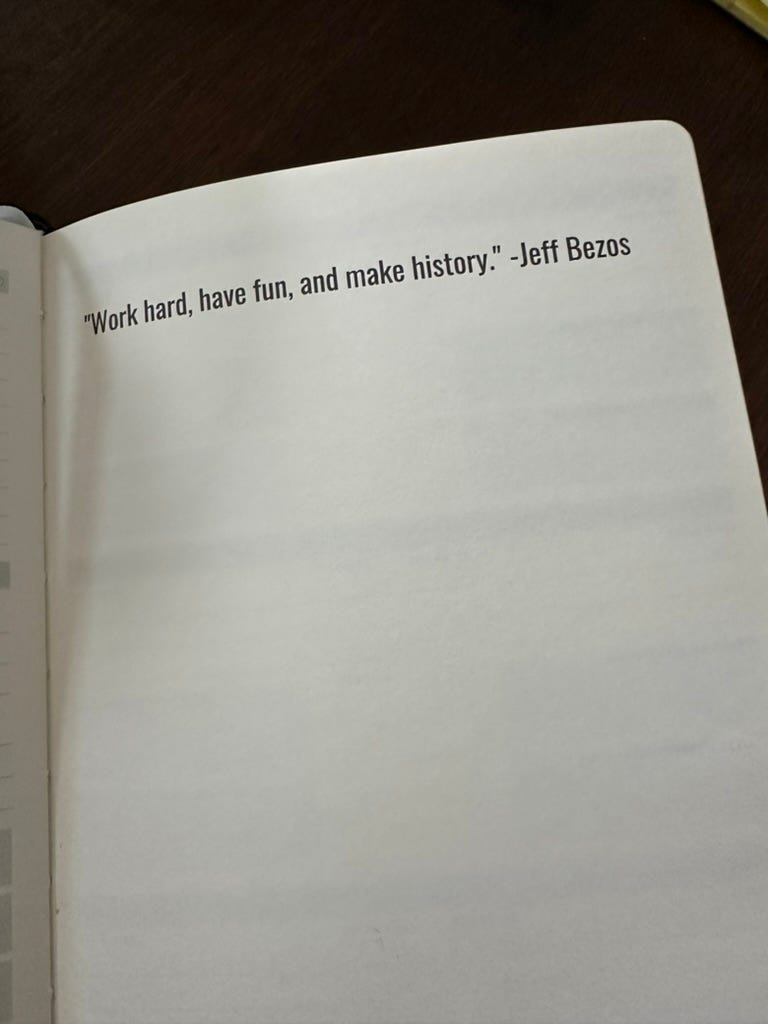
Re-reading this conversation multiple times as I put this together made me realize that I could stand to journal more (duh), and that my feelings of physical stagnation are always linked to my creative output… Something to consider. That’s all for now. Reply to this email or leave a comment if you want to reach me. :)
Queen Laura!!!!!
Loved this!