

Will This Chill Me Out?
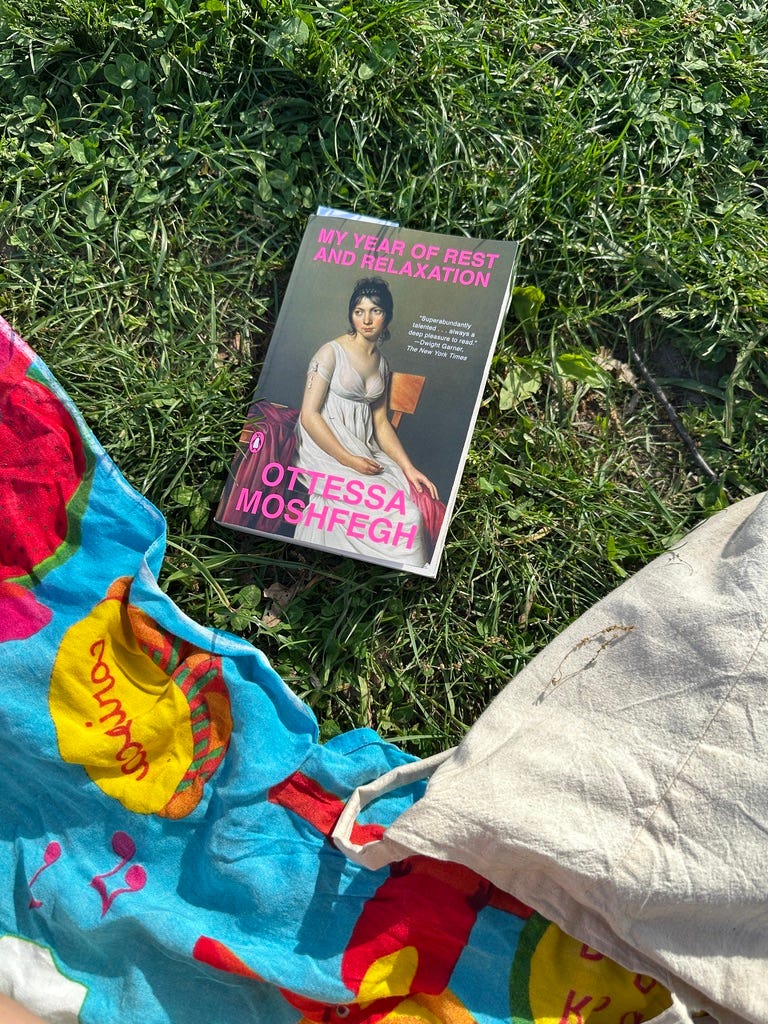
My year of rest and relaxation, you could say


Introducing Plant Based’s New Limited Series Will This Chill Me Out?
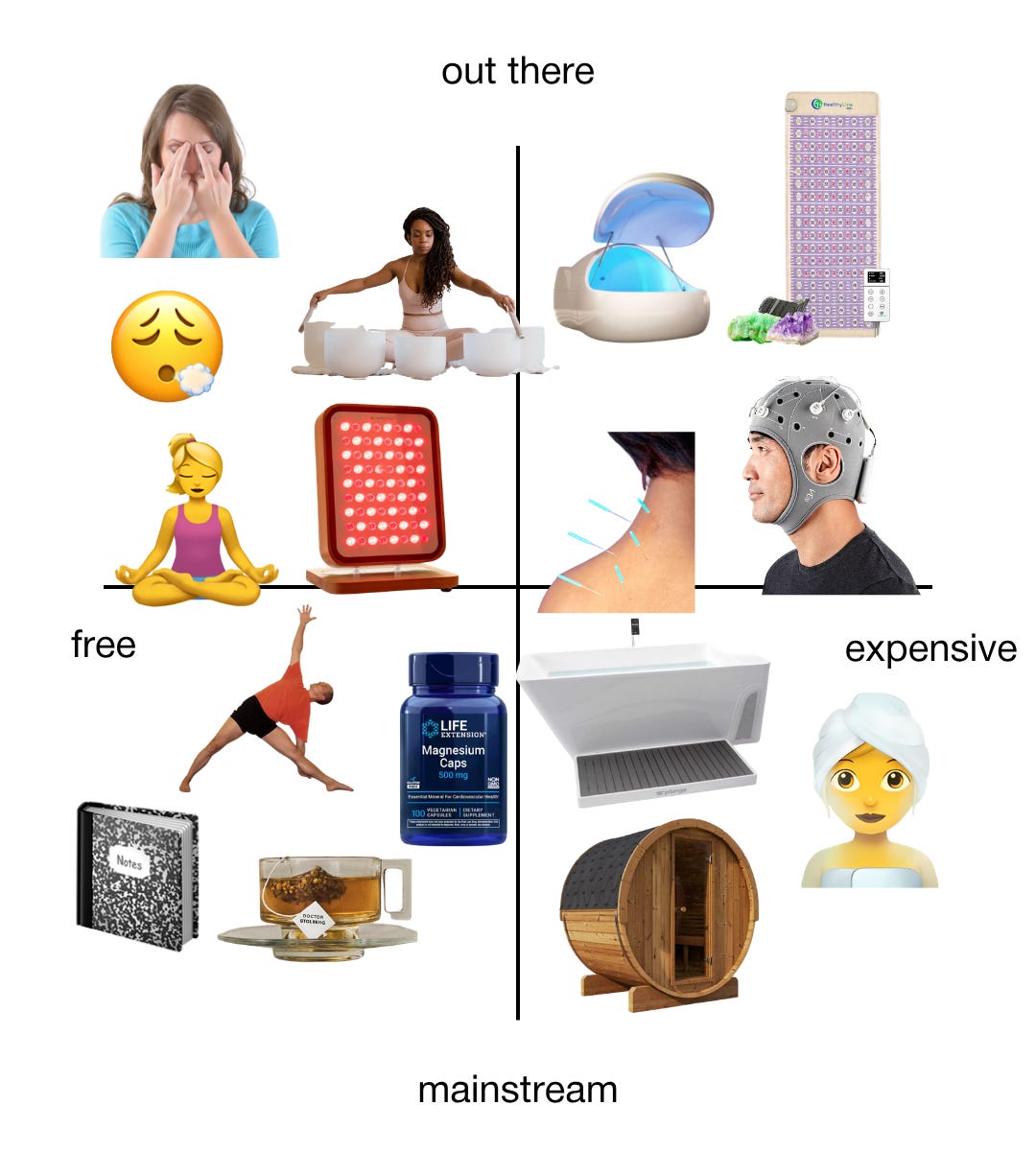
Follow me in my attempts at achieving adequate levels of relaxation by trying (almost) all of the modalities out there.

I have a lot of fun with this faux-gonzo journalism beat I’ve carved out for myself, specifically as it pertains to wellness and beauty (see: my in-depth reviews, the time I tested my skin’s hydration levels, and when I weaseled my way into referral-only Pilates studios), so I’m thrilled to have another excuse to try a combination of whack-ass treatments, buzzy supplements, and other left-of-center techniques in an effort to, well, find inner peace.
I’ll check in here monthly or so (relaxation requires time!) with a few dispatches from my experiences across the Chill Out spectrum, ranging from cliché to absurd. Today, we’re talking about breathwork, putting my bare feet in the ground, magnesium, and cupping. But first, a quick aside on why this actually matters.
According to the American Psychological Association’s “Stress in America” survey, a majority of Americans say their stress levels have increased over the past five years, with around 75% reporting physical or emotional symptoms related to stress. The biggest stressor was the future of our nation (…), while economy, work, and the spread of misinformation follow closely behind.
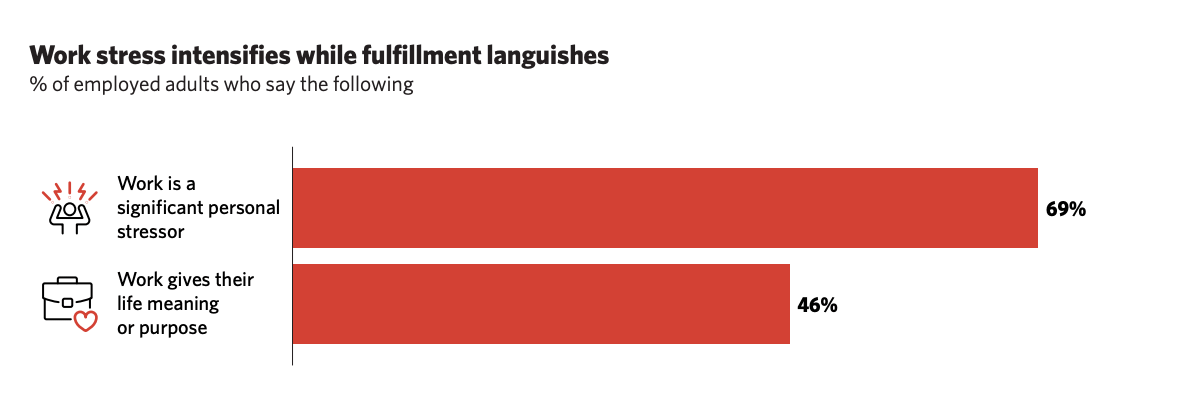
I’m most interested in the work category, personally. Nearly 69% of American adults claimed that work-related stress was a significant burden—the highest it’s been since the early days of the pandemic (70% in May 2020). Hustle culture did not die with the girlboss, in fact, it’s back and with a vengeance. Work continues to be a prevalent stressor, but the happiness and fulfillment that young adults were once receiving from it has staggered.
We know that when we’re chronically stressed—from work, global politics, personal relationships, whatever—the result is the same. Our bodies respond by activating our sympathetic nervous systems, creating a fight or flight response that prioritizes short-term survival over long-term stasis. My interview with Dr. Thibault Sutter, who is currently researching the effects of stress on longterm metabolic health, goes more in depth on all of this, so I’ll leave it there for now.
As a white woman and eldest daughter who came of age during the mid-aughts, I am, as everyone could have predicted, a victim of this American hustle culture. It’s in my blood, I hear, as a Capricorn, and choosing a professional path wherein I eat what I kill (not a very plant based way to say “self-employed”) naturally exacerbates it.
That being said, work gives my life a huge amount of meaning, which is another reason why maintaining a “work-life balance” is both difficult, and frankly, uninteresting to me. But I know that continuing to hustle, as it were, at this rapid pace is bad for my cortisol levels—and the rest of my endocrine system, as some troubling lab work recently confirmed. That’s why I’m NOT on a quest to achieve work life balance, but rather, to simply chill out a little more. And with that, let’s get into the Chill Report.
Breathwork Class
Breathwork, as we all know, is an ambiguous term with plenty of different associations. When I asked Alden Price, NYC-based practitioner, about it a few months ago, she defined it as “the conscious manipulation of the breath in order to help integrate the mental, physical and spiritual aspects of being.” Well said.
While there are certain breathing patterns used for up-regulation (energizing the body and mind a la Wim Hof), today’s discussion concerns the opposite. Down-regulating breathwork techniques activate the parasympathetic nervous system, nudging us toward that ever-elusive ‘rest and digest’ mode for inner relaxation.
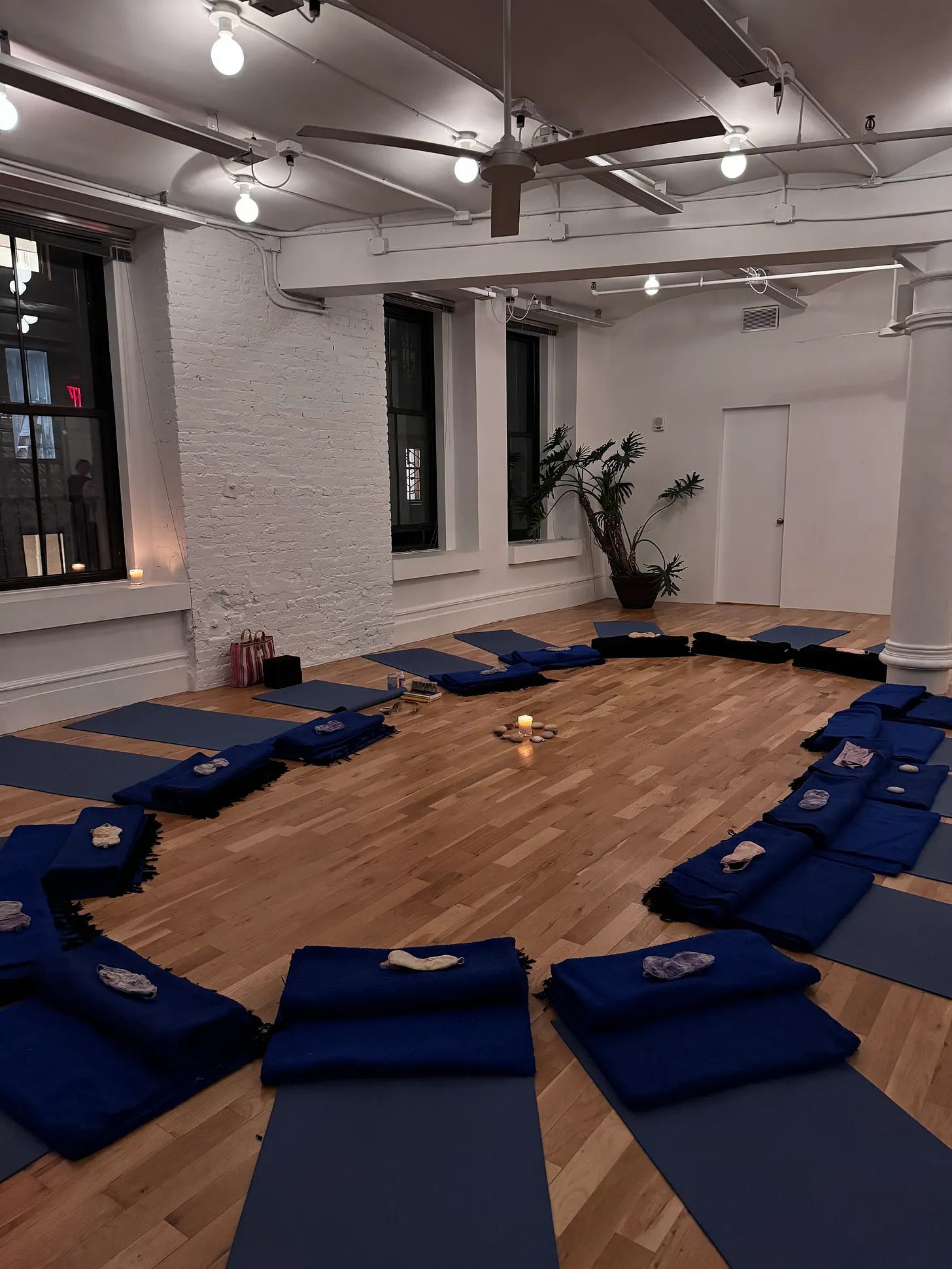
Sure, breathwork on its own is free, but I knew that I’d need something a little more… immersive… if I was going to give this a fair shake. That’s why I decided to see Alden herself for a breathwork session at Sky Ting, where she took a group of 30-or-so people through a holotropic breathing exercise set to music.
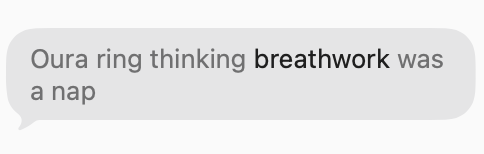
To set the scene: I’m sitting on a yoga mat, arranged in a circle in the center of the yoga studio with the faint smell of incense wafting through the air. Alden walks us through the technique
inhale to the belly → immediately inhale again to the chest → exhale passively through the mouth
and explains that it’s designed to clear stagnant energy and stuck emotions. When it’s time to begin, we all lay down on our mats, drape a blanket over our bodies for maximum comfort, close our eyes, and begin to breathe at her rhythm. At first, the breathwork experience is anything other than relaxing; breathing specifically and at a certain pace is actually quite challenging and requires focus. But after about five minutes, I started to get the hang of it, settling into a flow state. Emotions (ones that I’ve absolutely shoved down into the recesses of my being) started to rise to consciousness—first anger, then sadness, then an intense vulnerability. Tears started to flow out of my eyes as I realized how little I had been caring for myself on an emotional level. It was all very unexpected (like I said, deeply shoved) and profound. I walked out of Sky Ting in a fuzzy yet pleasant, stupor, similar to the feeling of walking out of a crazy massage.
The Verdict:
I can’t say this was particularly fun or relaxing as a process itself, but afterwards I felt a sense of catharsis that I haven’t experienced in—checks notes—years. It would be a good idea for me to try another session and see what else I can excavate.
Grounding
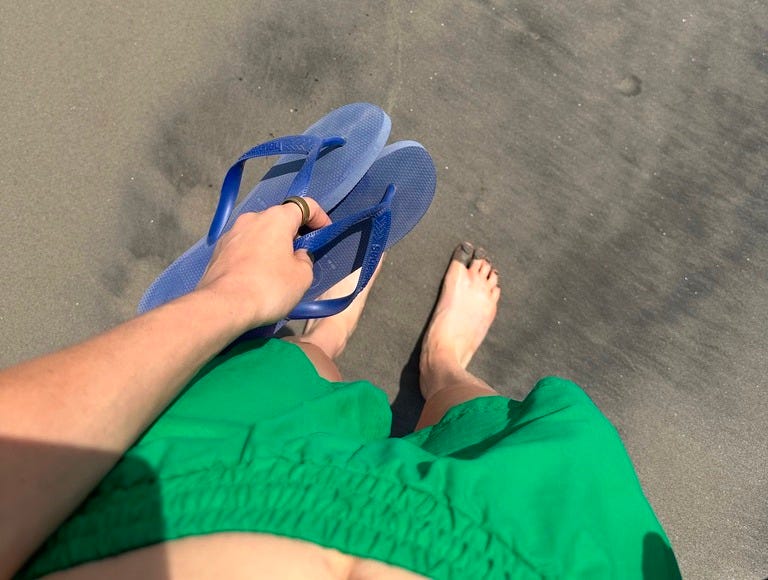
Grounding, otherwise known as Earthing, is the act of making direct skin contact with the surface of the Earth. In most cases, this looks like walking on grass or sand with bare feet to eliminate any barriers between our bodies and the planet. The theory is that by connecting to the Earth’s natural electrical charge, we receive electrons that rebalance our own. Because 95% of shoes that humans wear have synthetic soles, we’re disconnected from the planet’s natural vibration, which proponents say contributes to chronic illness, anxiety, and pain.
Some studies show genuinely astounding results—rapid wound healing (warning, link NSFW), sleep quality—following consistent earthing practices. There are also immediate benefits to be reaped.
As the name suggests, putting your bare feet on the Earth makes you feel grounded almost immediately. Given that I live in Manhattan, it’s not so easy to find an accessible patch of clean grass in which I can let the dogs out, so naturally I had to make my way to Central Park. Aside from the instant release that comes from sitting still, being disconnected from concrete and manmade structures, even by a matter of yards, gives me a sense of unfamiliar peace. Now add on 20 minutes with my feet directly in the Great Lawn’s finest, I was feeling uncharacteristically zen.

I’d be lying if I said this was my first experience with grounding. I used to walk around my college campus in the midst of senior year job hunt anxiety, finding quiet patches in the quad to stroll around and Downward Dog. (I was very cool and nobody thought I was weird.) I knew about this re-charging-from-the-Earth’s-electricity thing, but the act of getting outside of my isolated little bubble of emails and LinkedIn-ing (dark) and reconnecting with what matters—the planet—and thus creating a sense of awe and gratitude, was restorative enough on its own.
The Verdict:
Arguably one of the best free wellness practices, right next to sleeping. Huge ROI, highly recommend.
Magnesium
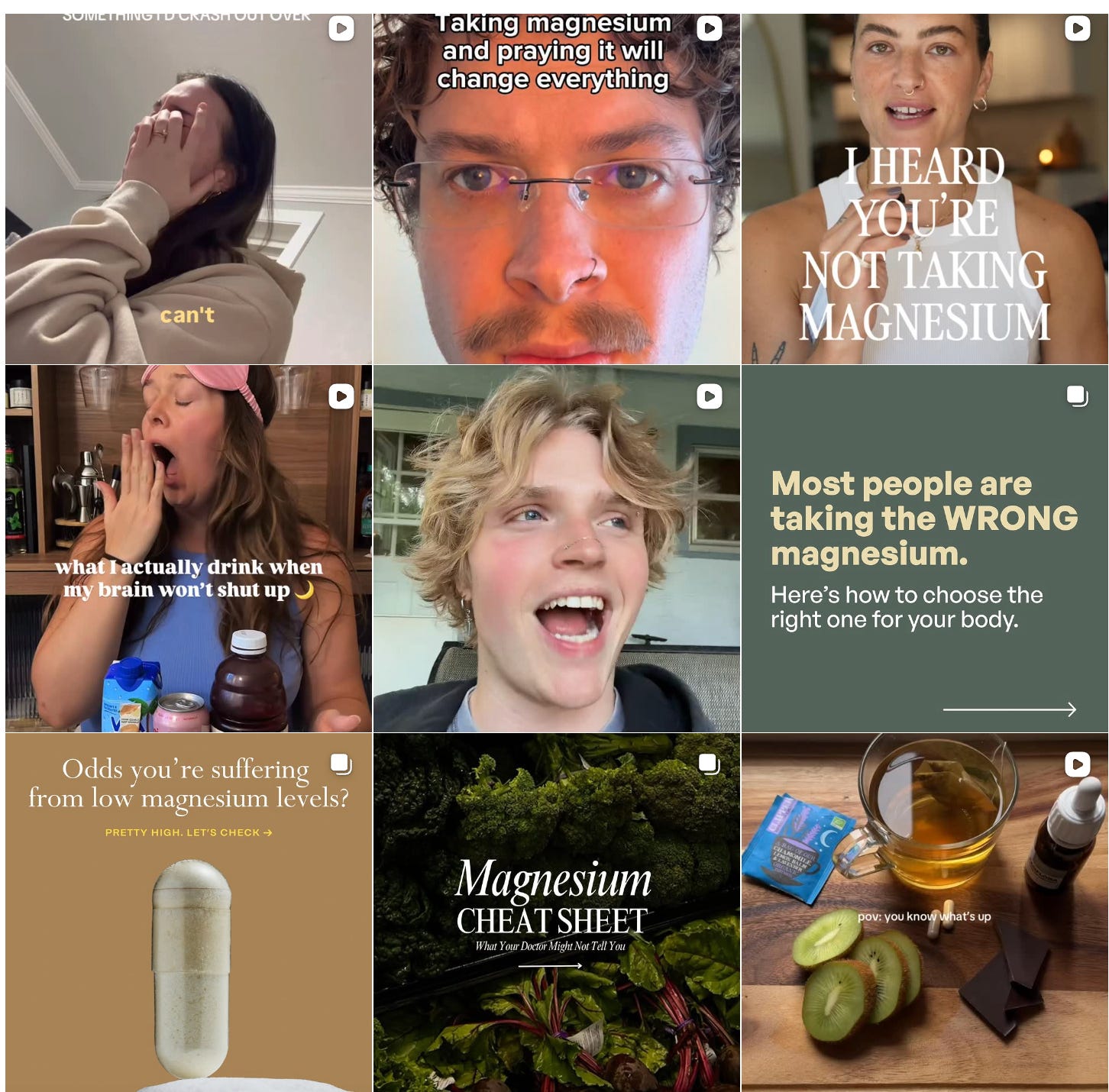
Magnesium is, as many of you know, a mineral required in over 300 biochemical reactions in our bodies, from energy production to blood sugar regulation to mood support. Because our bodies can’t produce magnesium on their own, and the fact that our soil has fewer nutrients than it once did, (plus the whole Standard American Diet thing), 50% of Americans are deficient.
I say ‘as many of you know’ because it’s statistically likely; in 2024, magnesium was the most searched supplement at 3.3 million times per month, and rising nearly 50% year over year.
I started taking magnesium about a decade ago (flex) after a particularly unhelpful IBS diagnosis. Like anyone who’s gotten a colonoscopy, I initially associated magnesium with gut motility—which, in hindsight, makes sense as an entry point to its broader role in muscular and mental relaxation.1
I’ve since graduated from mag citrate pills to some higher touch formats—bisglycinate capsules, liposomal L-threonate goos (although Cymbiotika changed that formula it seems),and a bioavailable blend of gluconate, acetyl taurinate, and citrate, with added L-theanine—depending on what I bought at the health food store that month.
A quick guide to the many types of magnesium:
Glycinate: Most often associated with relaxation and sleep.
L-threonate: A newer form of magnesium that supports cognition, memory, and mood. Think of it as the brain one.
Citrate: Typically used for constipation relief.
Malate: This one is more about energy than it is about calming.
Taurate: Used to support heart health and blood pressure.
Sulfate: A.K.A. an epsom salt bath. It’s great for relaxing muscle tension topically, but the jury is still out on whether it’s being absorbed into the bloodstream.
Oxide: Also constipation relief-related, but often cheaper and less effective (because it’s less readily absorbed) than citrate.
The Verdict:
Look, I’ve been taking magnesium every day for a long time, so it’s hard for me to compare it to the before times. A liposomal goo or a few glycinate pills don't have an instantaneous calming effect on me—I'll take them a few hours before bed and feel essentially nothing. The one magnesium supplement that DOES calm me quickly is the magnesium + L-theanine combo2 from Moon Juice, which sends me into a sleepy haze in about an hour, tops. Their Sleepy Mag is even more powerful. Be warned.
Cupping
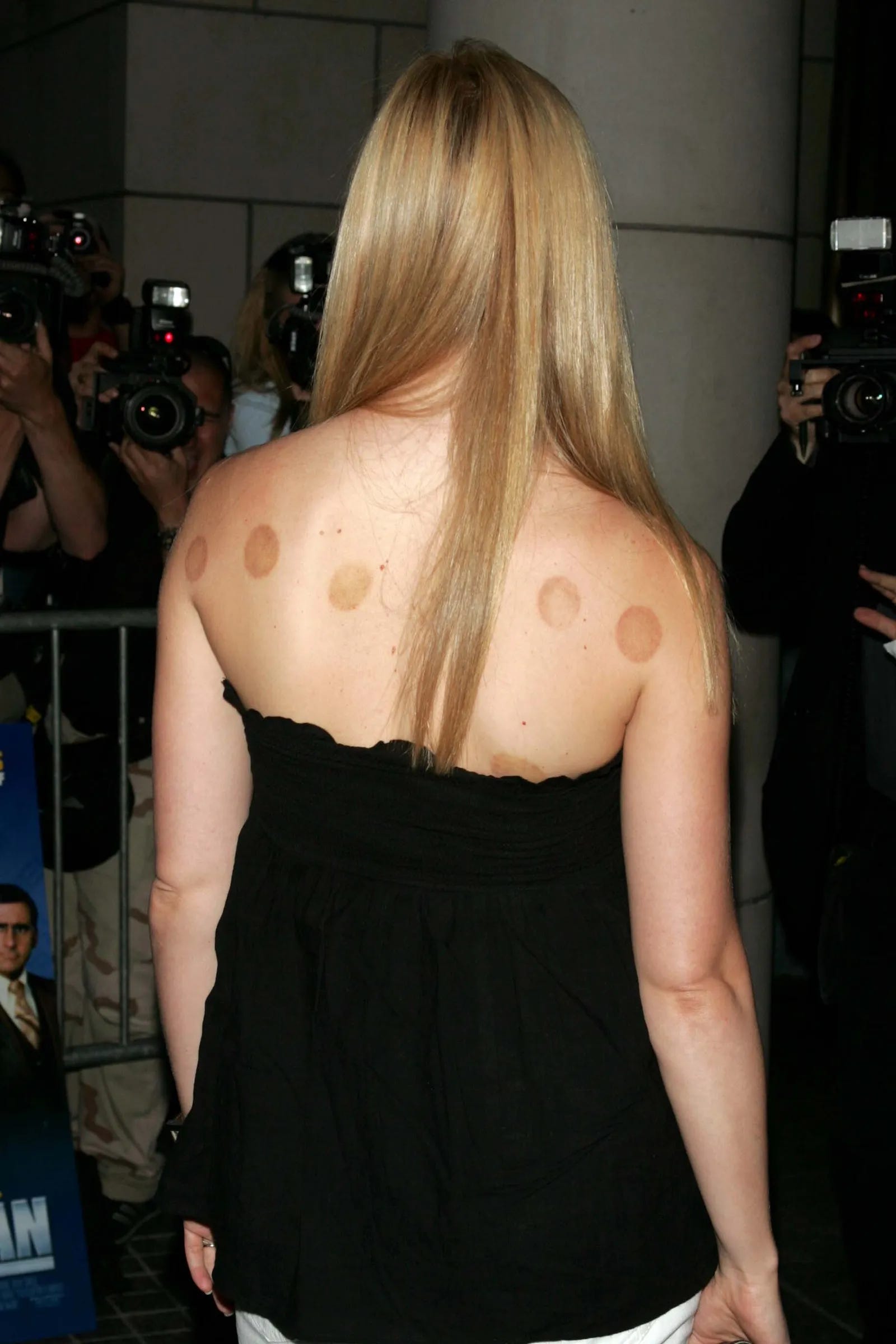
Cupping is when a practitioner suction cups different parts of your body—most commonly back, but also stomach, arms, legs—to ease pain and promote relaxation. It’s an ancient practice, first documented in Egypt, later found in Hippocrates’s notes, and used across Arabic, Islamic, Chinese, and Korean medicines, among others.
The science: the suction force expands and breaks tiny capillaries, leaving red marks on the skin. This stimulates blood circulation, brings oxygen to the affected muscles, and helps release myofascial tension. Better blood flow can also mean improved immune response, a reduction in inflammation, and detoxification, depending on who you ask.
I went to WTHN a few weeks ago for my first time. I laid face-down on the table as my practitioner placed rows of suction cups across my back, creating a sensation of comfortable pressure. I laid there for about 30 minutes, accompanied by soft spa music and my own thoughts, which is either meditative or a personal nightmare, depending on the day. She returned to remove the cups, revealing the expected red bruises.
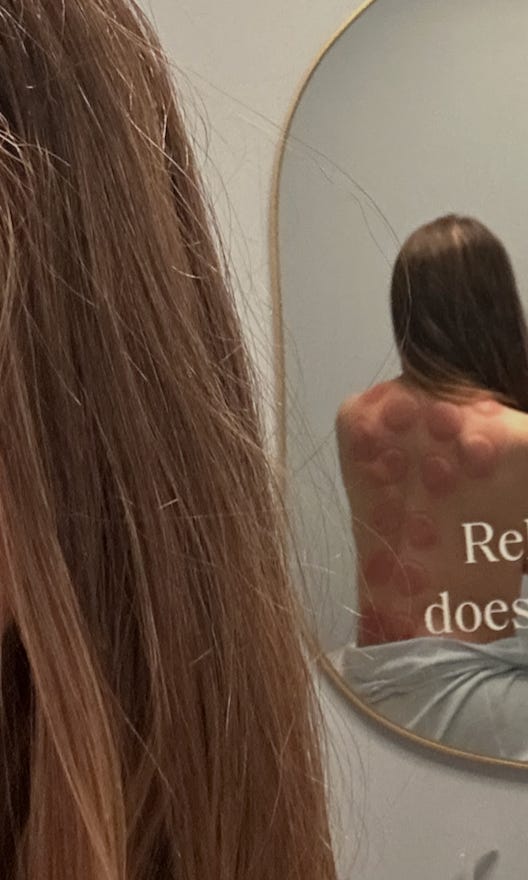
To my surprise, I was actually pretty relaxed during the treatment period—usually my brain runs at hyper speed if left to its own devices. I’d like to credit the soothing music and the weighted blanket-esque effect of the suction cups. The next day brought a pleasant post-massage soreness, though I hadn’t started out with back tension to begin with, so the release wasn’t anything miraculous.
The Verdict:
It was a fun novelty, but I can’t see myself doing it with regularity. It’s more about muscular relaxation than mental relaxation, but the forced screen-free time and physical inability to get up and be productive had positive secondhand effects. Whatever gets me to sit still, I guess.

Over and out on our first Relaxation Report. Up next: we’ll talk about floatation tanks, acupressure mats, and some other fun3 stuff. In the meantime, I’ll leave you with the sweet sounds of my hand-selected Will This Chill Me Out? playlist.



It always comes back to the gut-brain connection.
You can also just take magnesium capsules and l-theanine capsules at the same time if you want to DIY it, but drinking the powder is considered more bioavailable.
read: undetermined
long live gonza gals !!
Sooooo relevant for us. I remember the first time I saw cupping in the wild I thought it was a disease